
The Best Things to Do in Rome, Italy
From ancient icons to hidden corners, here’s my insider guide to the best things to do in Rome, Italy, perfect for both first visits and return trips.
Rome is one of those rare cities that feels less like a mere urban area and more like a living archive, a place where centuries overlap in plain sight. Ancient ruins sit casually beside baroque fountains, Renaissance façades frame busy piazzas, and everyday Roman life unfolds against a backdrop most cities would place behind glass.
Walk a single street and you’ll pass fragments of empire, layers of religious history, and small details that reveal just how many eras have left their mark here. The city doesn’t simply preserve its past; it wears it openly, often chaotically, and that’s exactly where its magic lies.
I’ve been returning to Rome for years — ever since my first trip when I was just 15. What started as wide-eyed fascination quickly turned into a long-term love affair with the city. Now that I live in Italy, Rome has become somewhere I return to often, whether for work, long lunches that stretch into the afternoon, or simply to rediscover a neighborhood I thought I already knew.
This guide is designed to help you experience both sides of Rome. I’ve organized it in two clear parts: first, the essential sights, the icons and big-name landmarks that absolutely deserve their place on every itinerary, especially if it’s your first time in the city.
Then, once you’ve experienced the classics, I move into the quieter corners and lesser-known experiences (scroll down to point 17ish), the hidden gems that feel more local, more surprising, and often more memorable.
Whether it’s your first visit or your fourth, and you’re ready to see a different side of Rome, this guide will help you navigate the best things to do in Rome with both curiosity and confidence.


Read also: The Perfect 3 Day Rome Itinerary for First-Timers
Top Tips for Visiting Rome
Rome is an easy city to enjoy, but it’s not always an easy city to navigate, especially if you arrive without a plan (don’t arrive without a plan; you definitely need a rough itinerary in Rome).
A few practical tips can make a big difference to how much you actually see and how relaxed your trip feels. Here are the things I always recommend keeping in mind before you go.


Book ahead (but timing matters) – Many attractions and restaurants need to be reserved in advance, especially in spring, summer, and around holidays. In winter or the shoulder seasons, you may have more flexibility, but it still helps to check availability before you go. A bit of planning upfront makes the trip feel much more relaxed once you’re there.
Plan around the crowds – Rome is busy for most of the year, and the main sights can get packed quickly. Visiting popular attractions early in the morning or later in the afternoon usually means shorter lines and a much better experience.
Don’t rely on last-minute decisions – Rome isn’t a city where you can always just turn up and hope for the best. The most popular landmarks, museums, and even some experiences have limited entry slots. Having a rough daily plan helps you avoid wasting time figuring things out on the spot. Places like the Vatican Museums and Galleria Borghese get booked up weeks in advance.
38 Best Things to Do in Rome, Italy
1. Visit the Colosseum


Built between AD 70–80 under the Flavian emperors, the Colosseum is the largest amphitheatre ever constructed in the Roman world and one of the most enduring symbols of ancient Rome.
It could hold tens of thousands of spectators who came to watch gladiator contests, staged hunts, and elaborate public spectacles designed to entertain and impress. Even in ruins, the scale is staggering — standing inside the arena gives a real sense of how central spectacle was to Roman life and politics.
It’s worth visiting not only for the history but also for the atmosphere and architectural ingenuity, from its tiered seating system to the underground chambers where animals and fighters once waited.
Tickets are timed and often include entry to the Roman Forum and Palatine Hill, so booking in advance is essential, especially in high season. Early morning or late afternoon visits tend to feel more manageable, and guided tours can add useful context if you want to understand what you’re actually looking at beyond the photo opportunities.
2. See the Roman Forum & Palatine Hill


The Roman Forum was once the beating heart of the Roman Empire, a dense complex of temples, basilicas, government buildings, and marketplaces where political decisions were made, and public life unfolded.
Walking through it today feels like stepping into the blueprint of Western civilization, even if many structures are now fragmented ruins. Above the Forum sits Palatine Hill, traditionally believed to be the birthplace of Rome and later home to lavish imperial palaces.
Visiting both together helps you understand how ancient Rome functioned as a city rather than just a collection of monuments. The area is sprawling and largely exposed to the sun, so comfortable shoes, water, and a bit of patience are essential.
Plan for at least two to three hours if you want to explore without rushing, and consider pre-booking a guided tour to the Forum, Palatine Hill, and Colosseum all in one. This means better understanding the context around the ruins and getting access to the site faster. On my last visit, the line into the Forum was horrendous- in February!
3. The Pantheon


Originally built as a temple to all Roman gods and completed around AD 126 under Emperor Hadrian, the Pantheon is one of the best-preserved monuments from antiquity.
Its massive concrete dome, still the largest unreinforced dome in the world, remains a marvel of engineering, and the central oculus creates a dramatic play of light that changes throughout the day.
Later converted into a church, the building survived largely intact while many others fell into ruin.
The Pantheon is a must-visit because it feels surprisingly alive, locals still attend mass here, and the space has a quiet gravity despite the crowds outside. It’s also the resting place of several notable figures, including the artist Raphael.
Entry now requires a ticket, and lines can build quickly, so arriving early or booking ahead is smart.
4. Trevi Fountain


Completed in 1762, the Trevi Fountain is a theatrical masterpiece of baroque design, blending sculpture, architecture, and water into one dramatic scene. The central figure of Oceanus rises from the rockwork as water rushes into the basin below, creating a constant sense of movement and sound.
The tradition of tossing a coin over your shoulder, said to ensure a return to Rome, has made it one of the city’s most beloved rituals.
The fountain is almost always crowded, but it’s still worth seeing for the sheer energy and scale. Visiting early in the morning or late at night makes a huge difference, when you can actually appreciate the details without shoulder-to-shoulder crowds. As of recently, it costs a couple of euros to visit up close and is easy to combine with nearby sights.
5. Spanish Steps


Built in the 18th century to connect Piazza di Spagna with the Trinità dei Monti church above, the Spanish Steps have long been one of Rome’s most famous meeting points. The wide staircase became a social hub over the centuries, immortalized in films, fashion shoots, and countless postcards.
While there isn’t a single major monument to explore here, the appeal lies in the atmosphere and the elegant setting.
The area surrounding the steps is known for designer boutiques, historic cafés, and lively street life, making it a natural place to pause during a day of walking. Sitting on the steps is now restricted, but the viewpoint from the top offers a lovely perspective over the rooftops below.
Read more: Where to Stay in Rome, Italy: Best Areas & Hotels
6. Linger on Piazza Navona & the Fountain of the Four Rivers


Piazza Navona sits on the footprint of an ancient Roman stadium built by Emperor Domitian, which explains its long, oval shape. Today it’s one of Rome’s most beautiful baroque squares, framed by elegant buildings and anchored by Bernini’s dramatic Fountain of the Four Rivers.
The combination of fountains, street artists, and café terraces makes it feel lively at almost any hour.
7. Visit the Vatican Museums & the Sistine Chapel
The Vatican Museums house one of the most important and extensive art collections in the world, assembled over centuries by popes who collected everything from ancient Roman sculptures to Renaissance masterpieces.
The museum complex is vast, with long corridors and galleries dedicated to maps, tapestries, classical antiquities, and some of the most celebrated works in Western art. Walking through the museums feels like moving through layers of history and power, offering insight not only into artistic achievement but also into the cultural influence of the papacy.
The visit builds gradually toward its highlight: the Sistine Chapel, located at the end of the museum route. Here, Michelangelo’s extraordinary ceiling frescoes and monumental Last Judgment remain as breathtaking in person as their reputation suggests, transforming the space into one of the most significant artistic experiences in Rome.
Because the Vatican Museums are so popular, planning ahead makes a huge difference. Timed tickets often sell out, and queues can be long even with reservations, so booking a guided tour is usually the smoothest option. Skip-the-line access saves time, while early-entry tours let you experience the galleries before peak crowds arrive.
Another excellent choice is a combined tour that includes both the Vatican Museums and St. Peter’s Basilica, or, for a more exclusive experience, an after-hours or VIP visit when the atmosphere feels calmer and more intimate.
8. St. Peter’s Basilica


St. Peter’s Basilica is one of the largest and most impressive churches in the world, built over what is believed to be the burial site of Saint Peter. Designed by some of the greatest architects of the Renaissance and Baroque periods, including Michelangelo and Bernini, the basilica combines monumental scale with extraordinary artistic detail.
Inside, you’ll find Michelangelo’s Pietà and a vast interior that feels almost overwhelming in its grandeur.
Entry to the basilica is free, but security lines can be long, especially in peak season. Climbing to the top of the dome is highly recommended for sweeping views over Vatican City and Rome’s rooftops.
Dress modestly — shoulders and knees should be covered — and try to visit early in the day to avoid the largest tour groups. It’s worth booking a combination access ticket to Saint Peter’s along with the Vatican Museums.
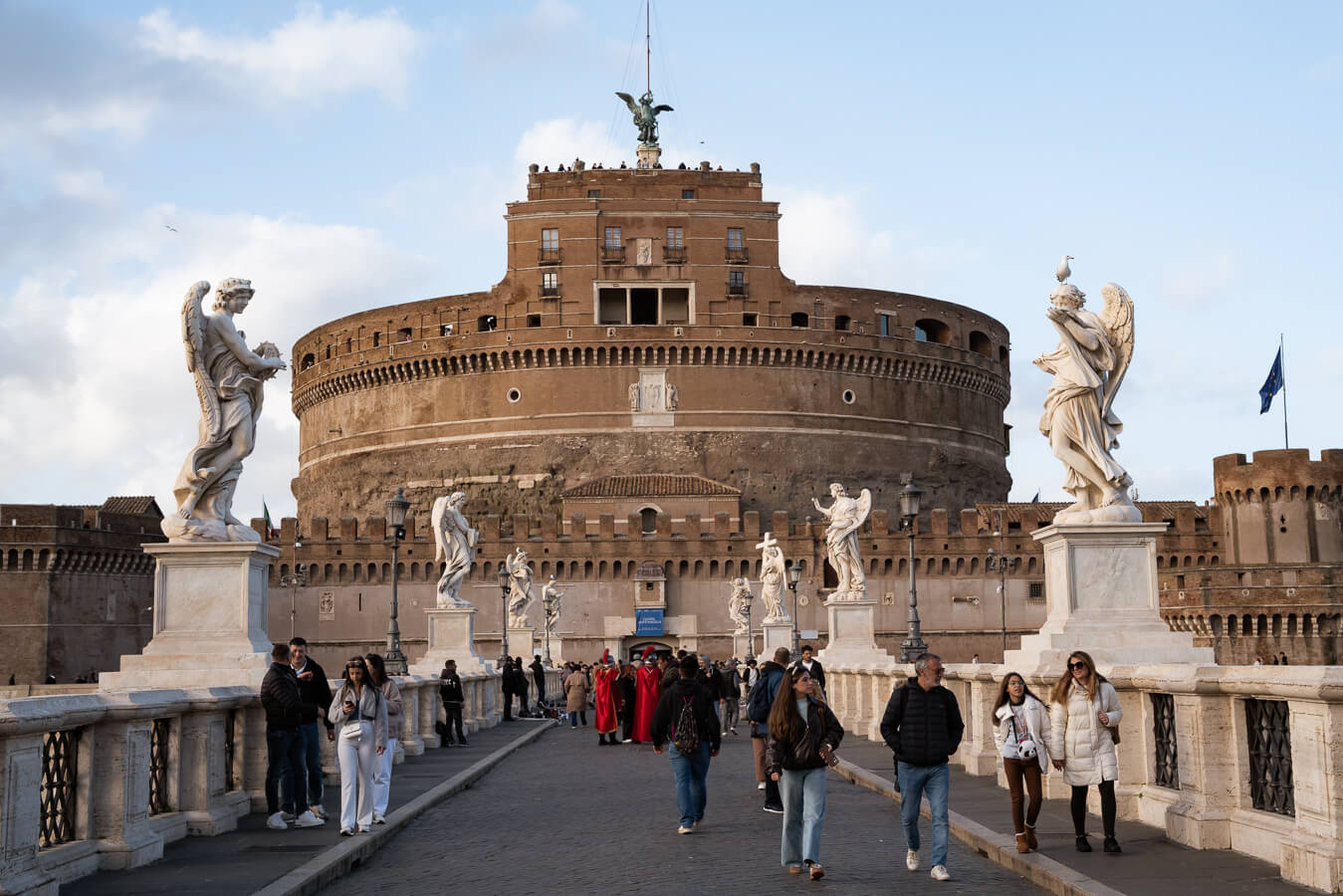
9. Castel Sant’Angelo


Originally commissioned as Emperor Hadrian’s mausoleum in the 2nd century, Castel Sant’Angelo has served many roles over the centuries — fortress, papal residence, prison, and now museum. Its strategic position along the Tiber made it a key defensive structure, and a secret passageway once connected it directly to the Vatican for papal escape.
Today, most come for both the history and the views. The interior ramps and rooms reveal layers of Rome’s past, while the upper terraces offer some of the best panoramas in the city.
10. Eat Gelato
A rite of passage for anyone coming to Italy, eating gelato in Rome is perfect, whether you’re wandering between monuments or taking an evening stroll after dinner.
Real gelato is denser and more intensely flavored than standard ice cream, made with less air and often with seasonal ingredients, which is why even simple flavors like pistachio or hazelnut can be surprisingly memorable.
My must-visit spots for gelato in Rome are Giolitti, Gelateria La Romana dal 1947, Frigidarium, and Ciampini Roma for a sit-down spot.
11. Browse the stalls at Campo de’ Fiori


Campo de’ Fiori is one of Rome’s liveliest squares, known for its daily market and social energy. Historically, it was a site of public gatherings and even executions, though today it feels far more relaxed and welcoming.
During the day, market stalls sell fruit, flowers, spices, and local products, attracting both tourists and locals.
By evening, the atmosphere shifts as bars and restaurants fill with people enjoying aperitivo and dinner. It’s a great place to stop for a casual drink or snack while exploring central Rome. If you’re looking for the perfect coffee or aperitivo spot nearby, I love Caffè Peru or Antico Bar Pasticceria Mariani.
12. Explore Trastevere


Trastevere is often described as one of Rome’s most charming neighborhoods, known for its cobbled lanes, ivy-covered buildings, and lively restaurant scene.
Historically a working-class area, it has retained a more local, slightly bohemian feel compared to the grand avenues across the river. Wandering here is part of the experience here; you’ll find small churches, hidden squares, and busy trattorias around nearly every corner.
The neighborhood really comes alive in the evening, when streets fill with diners, and the atmosphere turns energetic but relaxed. It’s an ideal area for dinner followed by a slow walk, and it works well even without a strict plan.
Expect crowds, especially in peak season, but the mix of locals and visitors keeps the vibe authentic yet is becoming more and more touristy each year.
13. Stroll Through Piazza del Popolo
Once the ceremonial northern entrance to Rome, Piazza del Popolo is a grand, symmetrical square anchored by an ancient Egyptian obelisk and framed by twin churches. The open space feels strikingly different from Rome’s tighter medieval piazzas, giving it a sense of calm and elegance.
Historically, this was where travelers first entered the city, making it a symbolic gateway to Rome.
14. Villa Borghese Gardens & Galleria Borghese
Villa Borghese combines one of Rome’s most beautiful green spaces with one of its finest art museums, making it an easy place to spend a slower, more relaxed half-day.
The gardens were originally created as a private estate for the powerful Borghese family and today serve as Rome’s largest central park, filled with shaded walking paths, fountains, viewpoints, and open lawns.
It’s the perfect break from the intensity of the historic center — a place to stroll, rent a bike, or simply sit for a while before diving back into sightseeing.
At the heart of the park sits the Galleria Borghese, a small but exceptional museum housed in the family’s former villa. Unlike larger institutions, the collection feels intimate and focused, featuring masterpieces by Bernini, Caravaggio, and Raphael.
Bernini’s sculptures are a particular highlight, famous for their movement and lifelike detail that really rewards close viewing. Entry is strictly timed, and visitor numbers are limited, so booking well in advance is essential.
15. The Capitoline Museums


Located on Capitoline Hill and centered around a square redesigned by Michelangelo, the Capitoline Museums are considered the world’s oldest public museums.
The collections focus heavily on ancient Roman sculpture, including iconic works like the bronze she-wolf associated with Rome’s founding myth. The museums provide excellent historical context that helps bring the city’s ruins to life.
They’re often less crowded than the Vatican Museums, making them a good choice if you want a more relaxed cultural experience. Allow at least a couple of hours to explore properly.
16. Victor Emmanuel II National Monument (Altar of the Fatherland)


Often called the Altare della Patria or simply “the Wedding Cake” by locals because of its bright white marble and grand scale, the Victor Emmanuel II National Monument dominates Piazza Venezia and is impossible to miss.
Built in the late 19th and early 20th centuries to honor Victor Emmanuel II, the first king of a unified Italy, the monument celebrates Italian unification and national identity. Its massive staircases, columns, and statues make it one of the most imposing modern additions to Rome’s skyline — a sharp contrast to the city’s ancient ruins nearby.
17. Seek Out Caravaggio’s Work


Rome is one of the best places in the world to experience the paintings of Caravaggio, the revolutionary Baroque artist known for his dramatic use of light (chiaroscuro), realism, and intense emotional storytelling.
Unlike many masterpieces locked away in museums, several of his most famous works are still displayed in the churches for which they were originally created — meaning you can encounter world-class art simply by stepping off a busy street and into a chapel.
Some of the most rewarding stops include San Luigi dei Francesi, home to the powerful Calling of Saint Matthew cycle; Santa Maria del Popolo, where you’ll find The Crucifixion of Saint Peter and The Conversion of Saint Paul; and Sant’Agostino, which houses Madonna di Loreto. Of course, you’ll also find plenty of other works by Caravaggio in the Capitoline Museums, Galleria Borghese, and the Vatican Museums.
18. Via dei Fori Imperiali
This wide avenue connects Piazza Venezia to the Colosseum, running alongside the ruins of several imperial forums built by Roman emperors. Constructed in the 20th century, it offers sweeping views over archaeological sites that would otherwise be hidden among narrow streets. Walking here gives a dramatic sense of Rome’s ancient scale.
19. Via Giulia
Via Giulia is one of Rome’s most elegant and understated streets — a long, straight Renaissance avenue lined with palaces, ivy-covered façades, and quiet courtyards that feel a world away from the crowds around nearby Campo de’ Fiori and Piazza Navona.
Commissioned in the early 16th century by Pope Julius II, it was designed to bring order and grandeur to this part of the city, and it still carries a refined, almost cinematic atmosphere that makes it ideal for a slower stroll.
20. Explore Monti


Monti is one of Rome’s most characterful neighborhoods with a mix of narrow streets, independent boutiques, vintage shops, and laid-back wine bars that give it a slightly more local, creative energy than the busier historic center.
Sitting between the Colosseum and Via Nazionale, it’s easy to reach but still feels like a neighborhood where people actually live, work, and linger. It’s the kind of place that rewards wandering without a plan, stopping for coffee, browsing small stores, or settling into a long aperitivo as the evening starts.
For food, Osteria Al Vicolo 9 is a great choice for a relaxed meal with a classic Roman feel, while Sacripante Art Gallery is an excellent aperitivo stop. If you’re thinking about staying in the area, Casa Monti is the standout option, combining boutique design with a neighborhood feel.
21. Go Shopping


Rome is full of stylish, character-driven shops where you’ll find thoughtful souvenirs, beautifully made clothing, and unique pieces that feel far more personal than anything from a standard shopping street. Here are some of the best stops to add to your list:
- Chez Dédé — chic, travel-inspired accessories and beautifully curated lifestyle pieces.
- Stay. — a stylish linens store, all made in Italy, perfect for towels, bed linen, and more.
- Gammarelli — Rome’s historic tailor, famous for dressing clergy and the pope himself, and known for impeccable craftsmanship. The socks here are what to get.
- Emporio Centrale — a cool mix of design-forward clothing, accessories, and curated finds.
- Antica Libreria Cascianelli — an atmospheric old-school bookshop full of character.
- Cartoleria Pantheon dal 1910 — a classic stationery store with elegant paper goods and writing accessories.
- Babastyles — a great stop for curated vintage fashion and unique pieces. I regret not buying a beautiful YSL blouse from here.
- Schostal Originals — timeless sleepwear and heritage-inspired wardrobe staples.
- Borghetto Flaminio Market — a weekend vintage market perfect for second-hand fashion, accessories, and unexpected treasures (go early for the best finds).
22. Galleria Spada


Galleria Spada is one of Rome’s quieter artistic gems, a small museum inside a 16th-century palace that feels more like a private residence than a formal gallery. Its collection focuses on Renaissance and Baroque works displayed in richly decorated rooms, making it a calm, intimate alternative to the city’s larger museums.
The standout feature is Borromini’s famous forced-perspective gallery in the courtyard — an optical illusion that makes a short corridor appear dramatically longer than it really is. The visit is relatively quick, which makes it an easy addition to a day in the historic center, especially if you’re looking for something a little more off the main tourist path.
23. See What’s On at Palazzo Barberini
Palazzo Barberini is one of Rome’s most impressive art palaces, home to part of the National Gallery of Ancient Art and a strong collection of Renaissance and Baroque masterpieces. The building itself is worth the visit — designed by some of the era’s leading architects, with grand staircases and elegant rooms that reflect the power of the Barberini family.
Highlights include works by Caravaggio, Raphael, and Pietro da Cortona, whose dramatic ceiling fresco is a showstopper on its own.
What makes Palazzo Barberini especially worth checking is its rotating exhibitions, which often bring in major temporary shows alongside the permanent collection. It’s a good idea to see what’s currently on before your visit, as the programming changes throughout the year and can add a fresh angle even if you’ve been before.
Right now and until June 2026, after the success of the Caravaggio exhibition in 2025, there’s a fantastic Bernini exhibit that explores the remarkable partnership between Gian Lorenzo Bernini and Maffeo Barberini, the artist’s earliest and most influential patron — who later became Pope Urban VIII after his election in 1623.
24. Hunt for the Best Cacio e Pepe or Carbonara
Trying Rome’s classic pasta dishes is practically mandatory, and few culinary debates are taken as seriously here as where to find the best cacio e pepe or carbonara. These recipes are simple on paper — just a handful of ingredients — which is exactly why the quality varies so much from place to place.
If you want a deeper dive, head to my guide on the best restaurants in Rome, where I break down the spots worth seeking out. And if you’d rather let someone else do the navigating, a food tour is a fun thing to do in Rome and a great way to taste several versions while learning about Roman food culture along the way.
Going with a guide can be especially helpful on a first trip — you skip the guesswork and get straight to the good stuff.
25. Visit Palazzo Farnese


Palazzo Farnese is one of Rome’s finest Renaissance palaces, built in the 16th century for the powerful Farnese family and admired for its grand, harmonious architecture. Today it serves as the French Embassy, so access is limited, but the building remains one of the city’s most impressive historic residences.
The highlight inside is the frescoed Gallery of the Carracci, a masterpiece that helped shape the Baroque style. Visits are only possible through guided tours, so booking ahead is essential. Even if you don’t go inside, the elegant façade on Piazza Farnese is worth seeing while exploring this quieter corner of the historic center.
26. Visit the Stanze di Sant’Ignazio di Loyola
The Stanze di Sant’Ignazio di Loyola are a small but fascinating set of rooms where Saint Ignatius of Loyola, founder of the Jesuit order, lived and worked in the 16th century.
Located beside the Church of the Gesù, the spaces preserve personal objects, religious artworks, and details that offer a more intimate look at the history of the Jesuits in Rome.
It’s a quiet, often overlooked stop that contrasts nicely with the city’s larger monuments. The visit is usually brief but rewarding, especially if you’re interested in religious history or want to step into a lesser-known corner of Rome’s past.
Combine it with a visit to the nearby church for a deeper sense of the area’s significance.
27. Galleria Doria Pamphilj


Galleria Doria Pamphilj is one of Rome’s most remarkable private art collections, still housed inside the aristocratic palace where it was originally assembled. The gallery feels more like stepping into a grand family residence than a museum, with richly decorated rooms lined floor-to-ceiling with paintings by artists such as Caravaggio, Velázquez, Titian, and Raphael.
The highlight for many visitors is Velázquez’s famous portrait of Pope Innocent X, often considered one of the greatest portraits ever painted. It’s also worth paying extra for access to the private apartments, which offer a more intimate glimpse into the family’s historic living spaces and are absolutely worth the additional ticket.
The gallery is usually quieter than Rome’s major museums, and you can explore at a slower pace, while the audio guide adds excellent context that really brings the collection to life.
28. Admire Sculpture at Palazzo Altemps


Palazzo Altemps is one of Rome’s most underrated museums and a dream stop for anyone interested in classical sculpture. Part of the National Roman Museum, it’s housed inside a beautifully restored Renaissance palace where ancient statues are displayed in grand halls, courtyards, and frescoed rooms.
The collection focuses on ancient Greek and Roman sculptures, many of which once belonged to noble Roman families, and the layout allows you to appreciate the pieces up close without heavy crowds.
It’s a calm, atmospheric alternative to the city’s busier archaeological sites and an easy stop to combine with nearby Piazza Navona. Don’t miss the beautifully frescoed portico on the first floor.
29. Galleria Colonna
Galleria Colonna is one of Rome’s most spectacular private palaces, famous for its jaw-dropping Baroque gallery lined with mirrors, chandeliers, and an extraordinary collection of paintings.
Still owned by the Colonna family, the palace feels lavish and theatrical, with rooms that showcase centuries of aristocratic wealth and taste. Walking through the grand halls feels more like stepping into a film set than a traditional museum.
The highlight is the Great Hall, where floor-to-ceiling artworks and ornate decoration create one of the most impressive interiors in Rome. Because opening days are limited, it’s important to check schedules before visiting, but the effort is well worth it.
30. Visit the Basilica Papale di Santa Maria Maggiore


Santa Maria Maggiore is one of Rome’s four major papal basilicas, but it often surprises visitors because it feels both monumental and unexpectedly calm. Founded in the 5th century, it’s one of the oldest churches dedicated to the Virgin Mary and has been continuously used for worship ever since.
Step inside and the atmosphere shifts immediately: glittering mosaics, richly decorated ceilings, and layers of history that span centuries of additions and restorations. Unlike some of Rome’s more crowded churches, you can usually take your time here, making it a rewarding stop even if you’re not specifically seeking out religious sites.
It’s also conveniently located near Termini, which makes it an easy addition to a walking route or a first or last stop in the city.
31. Admire the View from Giardino degli Aranci


Giardino degli Aranci, or the Orange Garden, is one of Rome’s most peaceful viewpoints and a perfect escape from the busier streets below. Set on the Aventine Hill (one of my favorite neighborhoods in Rome), the small garden is lined with orange trees and framed by neatly kept paths that lead to a panoramic terrace overlooking the city.
From here, you get one of those classic Rome views — the Tiber, domes, rooftops, and church towers stretching toward the horizon. Come in the late afternoon and stay for sunset, when the light softens, and the skyline glows in warm tones.
32. Peep into the Keyhole of the Order of Malta
I’m not entirely convinced the queues that often form around this tiny keyhole are worth it anymore — but if you’re already nearby and the line isn’t too long, it’s a fun little detour.
Set on the Aventine Hill, the famous keyhole belongs to the headquarters of the Sovereign Military Order of Malta, and looking through it reveals a perfectly framed view of St. Peter’s Basilica at the end of a manicured garden path.
The appeal is really in the novelty and the precision of the view rather than the experience itself, which lasts only a few seconds. Still, it’s one of those quirky Roman moments that you might enjoy ticking off, especially when combined with nearby stops like the Orange Garden.
33. Hendrik Christian Andersen Museum
The Hendrik Christian Andersen Museum is one of Rome’s more unusual hidden gems, a quiet, often overlooked space dedicated to the Norwegian-American sculptor Hendrik Christian Andersen.
Housed in the artist’s former home and studio, the museum feels personal and slightly eccentric, filled with large-scale sculptures, sketches, and ambitious architectural visions that reflect Andersen’s grand ideas about art and society.
It’s not a typical stop on most itineraries, which is exactly why it’s worth visiting. The rooms offer a glimpse into an artist’s world that feels frozen in time, and the atmosphere is calm and contemplative compared to Rome’s busier museums.
If you enjoy discovering lesser-known cultural spots or want a break from the crowds, this is a cool thing to do in Rome.
34. Go for Aperitivo


While the ritual of aperitivo is more of a Milan thing than a Roman one, it has very much become an Italian-wide habit, and Rome does it well in its own relaxed way. It’s all about slowing down at the end of the day with a drink, a few small bites, and good conversation before dinner. After a long day of sightseeing, it’s one of the nicest ways to slip into the local rhythm.
There are plenty of great places to settle in, depending on your mood. Ciampini Roma is a classic choice if you want something elegant and central, while Il Bar della Musa inside the beautiful Palazzo Talia offers a more refined setting that feels quietly special.
For wine lovers, Il Vinaietto is a reliable go-to with a strong selection by the glass, and if you want something more casual and distinctly Roman, Bar San Calisto in Trastevere delivers old-school charm and lively atmosphere.
35. Baths of Caracalla
The Baths of Caracalla are some of the most impressive ancient ruins in Rome, offering a glimpse into the scale and sophistication of Roman daily life. Built in the 3rd century AD, these enormous public baths once included hot and cold pools, exercise areas, gardens, and social spaces that could accommodate thousands of people at a time.
Even today, the towering walls and vast open spaces make it easy to imagine how grand the complex once was. You can wander at your own pace or take a guided tour, taking in the architecture and the surprisingly peaceful atmosphere.
36. Explore the Roman Catacombs
Beneath the streets of Rome lies a vast network of ancient burial tunnels known as the catacombs, used by early Christians and Jewish communities between the 2nd and 5th centuries. Visiting them offers a completely different perspective on the city — quiet, atmospheric, and far removed from the busy piazzas above.
Several catacombs are open to visitors, usually by guided tour, which helps explain their history and symbolism. It’s a short but memorable experience, especially if you’re curious about Rome’s lesser-seen layers and want to add something a little different to your itinerary.
37. Enjoy the View from Belvedere del Gianicolo
Belvedere del Gianicolo, or Janiculum Hill, offers one of the most sweeping panoramic views over Rome. From this terrace, you can take in a skyline of domes, bell towers, and terracotta rooftops stretching across the city — a perspective that really helps you appreciate Rome’s scale and beauty from above.
It’s a peaceful spot compared to many central viewpoints and well worth the short climb, especially in the late afternoon or around sunset when the light turns warm and golden. Pair it with time in nearby Trastevere; I love coming here for sunset and then heading into the neighborhood for aperitivo and then dinner.
38. Bike along the Appian Way
Cycling along the Appian Way (Via Appia Antica) is one of the best ways to experience a quieter, more open side of Rome. Often called one of the oldest roads in the world, this ancient route once connected Rome to Brindisi (you can cycle parts of it here in Puglia) and is still lined with Roman ruins, tombs, and fragments of history that appear almost casually along the roadside.
Riding here feels completely different from the busy city center — more countryside than capital. The road is mostly flat and ideal for a relaxed ride, with bike rentals available nearby.
Which of these best things to do in Rome will you be heading to? Let me know your questions and comments below, I’d love to hear from you.
Now more than ever, make sure not to leave home without travel insurance. For the last few years, I’ve been using Safetywing Nomad Insurance for all my individual trips and digital nomad lifestyle and there’s no better company for all my insurance needs. Cover starts from as little as $58 per month. Get your quote below now.
Planning a trip right now? These are just some of my favorite websites I use to book everything from hotels to rental cars!
Discover Cars for quick and easy car rentals worldwide
Booking.com for great deals on hotels
Agoda also for great deals on hotels
Viator for tours and adventures around the world
Related posts you might like:
The Perfect 3 Day Rome Itinerary for First-Timers
Where to Stay in Rome, Italy: Best Areas & Hotels
The Best Restaurants in Rome, Italy
The Best Restaurants in Trastevere, Rome
Dining At: Idylio by Apreda, Rome
Dining At: Ristorante All’Oro, Rome
Dining At: Marco Martini, Rome
25 Hidden Gems in Florence, Italy to Seek Out on Your Trip
SAVE & SHARE ON PINTEREST


